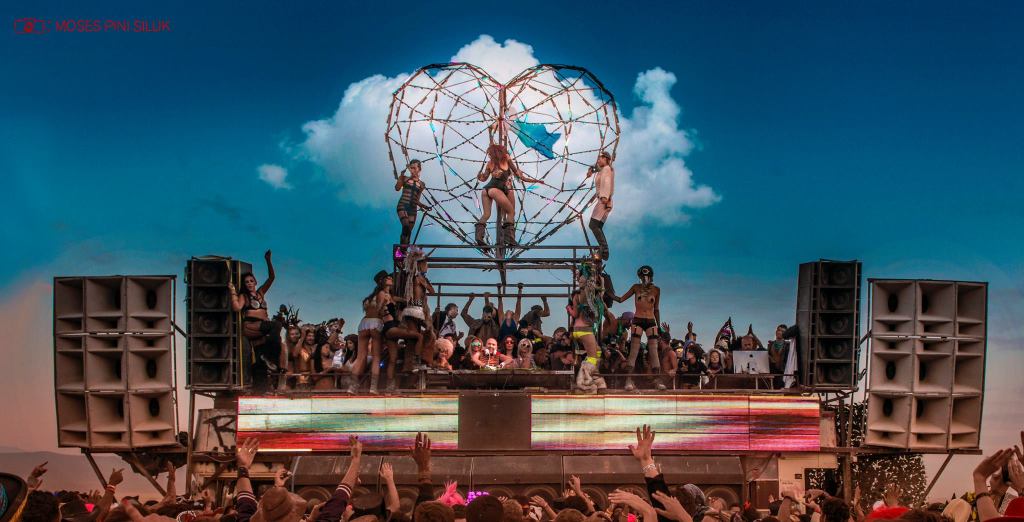
During the “Man burn” on August 30, 2025, a participant was discovered “lying in a pool of blood” in Black Rock City, Nevada. Authorities have identified the victim as Vadim Kruglov, 37, a Russian national living in the U.S. The case is being treated as a homicide, and investigators are still seeking a suspect and witnesses who were near 8:30 & I on burn night. Burning Man Project has publicly confirmed the death, is cooperating with law enforcement, and has amplified requests for tips, including a Secret Witness program.
Inside the investigation: who’s running point and what’s missing
The Pershing County Sheriff’s Office is leading the case, with the Washoe County Medical Examiner confirming identity by fingerprints. Law enforcement has processed the scene and interviewed nearby participants, but has not announced a suspect or motive. The Black Rock Desert’s unique environment—temporary city, minimal fixed surveillance, patchy cell service, and rapid teardown—complicates evidence collection and witness follow-up. As of September 7–8, the homicide remained unsolved.
Security and infrastructure gaps that matter (and the one that hurts most)
Burning Man’s culture—decentralized camps, participant-built art, and “mutant vehicles”—creates a vibrant but low-visibility environment. That’s a dream for self-reliance; it’s a nightmare for forensics. This year also featured other high-risk incidents, including a high-profile art-car collision involving a Cybertruck and reports of an electrocution, underscoring how thin the safety margin can get in whiteout dust and darkness.
Could this have been prevented?
Maybe—if you believe in neat solutions to messy systems. Burning Man runs on principles, perimeter tape, Rangers, radios, and trust, not stadium-grade CCTV and metal detectors. Enhanced lighting, more fixed cameras, and stricter ingress checks would help after a crime—but at the cost of transforming the event into exactly what many attendees go there to escape. The hard truth: a city of ~70,000 in extreme conditions will always carry non-zero homicide, trauma, and medical risk, and 2025 put that on display.
Organizational fallout: permits, policing, and insurance
Expect BLM permit scrutiny, tighter mutant vehicle rules, and more law-enforcement presence around peak nights. Insurers and land managers react to outcomes, not ideals; a homicide plus severe injuries invites premium hikes, coverage carve-outs, and new conditions tied to lighting, vehicle movement, and night operations. The likely near-term result isn’t cancellation; it’s more rules, more checkpoints, and higher costs pushed down to camps and attendees—without any guarantee that the next tragedy is the kind you can regulate away. (Inference based on 2025 law-enforcement posture and prior post-incident policy tightening in festival ecosystems.)
This isn’t the first dance festival to turn deadly
Electronic music events carry different dominant risks—crowd crush, vehicle strikes, drugs, or targeted violence—depending on layout and culture. A short, sobering ledger:
- Love Parade, Germany (2010): 21 dead, 500+ injured in a crowd-turbulence disaster at a bottlenecked ramp—an urban planning and crowd-flow failure, not “panic.”
- Time Warp, Argentina (2016): 5 deaths, multiple critical cases, suspected drug overdoses; the second night was canceled.
- Electric Zoo, NYC (2013): 2 MDMA-related deaths prompted cancellation of the final day and, later, major safety changes.
- BPM Festival, Mexico (2017): 5 killed, 15 injured in a nightclub shooting on closing night.
Burning Man’s own history includes a 2014 art-vehicle fatality and 2017’s fire-perimeter breach, when Aaron Joel Mitchell ran into the flames and later died—radically different mechanisms, same outcome.
Numbers to know
- ~70,000 attendees converged on the playa in 2025, forming a pop-up city the size of a mid-market U.S. town—without the fixed infrastructure. (Attendance reported in multiple contemporary accounts.)
- 1,500+ injuries were reportedly treated in a recent year, typical of large-scale desert operations where dehydration, falls, vehicle mishaps, and substance use stack up quickly—even before adding intentional harm to the list.
The cynical verdict
Burning Man will survive this. It will add policies, publish statements, and hold listening sessions. Rangers will train harder; vehicle rules will tighten; maps will grow new “safety zones.” Insurance will cost more; tickets will cost more; the event will inch closer to the very apparatus it claims to transcend. And next year, the dust will still be blind, the night will still be dark, and human nature will still be human. In a city built on radical trust, the rare bad actor—or the one catastrophic lapse—always has an edge. 2025 didn’t invent that vulnerability; it merely made the invisible visible.
Keywords: Burning Man 2025 homicide, Vadim Kruglov, Pershing County Sheriff, Black Rock City investigation, mutant vehicles safety, festival fatalities history, Love Parade 2010, Time Warp Argentina deaths, Electric Zoo MDMA deaths, BPM Festival shooting, Burning Man permits insurance, EDM festival risk statistics, crowd safety, event security, Nevada desert festival
Photo credit: Buzzspeakerhiresydney
